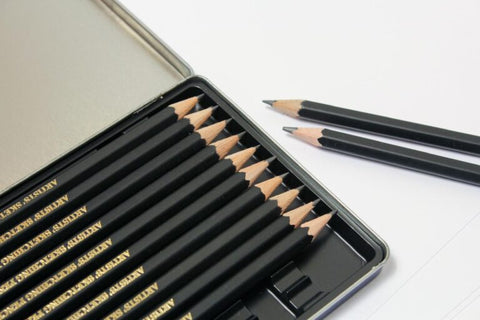
The Best Drawing Pencils for Beginners
When starting your journey into the world of drawing, selecting the right tools is essential. Drawing pencils are a fundamental tool for any aspiring artist, offering versatility and precision in creating artwork. Here, we explore some of the best drawing pencils suitable for beginners:
HB Pencil
The HB pencil is a classic choice for beginners due to its medium hardness, making it versatile for both light sketching and darker shading. It offers a good balance between precision and smoothness, making it ideal for various drawing techniques.
2B Pencil
The 2B pencil is slightly softer than the HB pencil, allowing for darker lines and shading. It is great for adding depth and contrast to your drawings while still offering control and detail when needed.
4B Pencil
For beginners looking to experiment with bolder strokes and richer shading, the 4B pencil is an excellent choice. Its softer lead creates darker lines with minimal effort, perfect for creating dramatic effects in your artwork.
H Pencil
If you prefer lighter and finer lines in your drawings, the H pencil is a great option. With its hard lead, the H pencil allows for precise detailing and intricate work, making it suitable for technical drawings or fine art illustrations.
Mechanical Pencils
For beginners who prefer consistent line widths and easy lead refills, mechanical pencils are a convenient choice. They come in various lead sizes and hardness levels, offering flexibility in line weight and style.
Experimenting with different drawing pencils can help you discover your preferred tools and techniques as a beginner artist. Remember that practice and exploration are key to developing your skills and finding your unique artistic voice.
8 Reasons Why Drawing Pencils Are Perfect for Beginners
- Versatile tool for various drawing techniques.
- Ideal for both light sketching and dark shading.
- Offers control and precision in artwork.
- Helps beginners experiment with different line weights.
- Convenient for creating detailed and intricate drawings.
- Easy to erase and correct mistakes during the learning process.
- Encourages creativity and artistic exploration.
- Available in a range of lead hardness options to suit different preferences.
Challenges Beginners Face with Drawing Pencils: Shading, Sharpening, and Selection
- Limited range of shading compared to charcoal or pastels
- May require frequent sharpening, leading to wastage of pencil material
- Harder pencils (e.g., H) can sometimes leave faint marks that are difficult to erase
- Soft pencils (e.g., 4B) may smudge easily, requiring extra care when handling artwork
- Mechanical pencils can be more expensive in the long run due to lead refills
- Beginners may find it challenging to select the right pencil hardness for their desired effect
Versatile tool for various drawing techniques.
Drawing pencils are a versatile tool for beginners as they allow for exploration and mastery of various drawing techniques. From light sketching to bold shading, drawing pencils offer the flexibility needed to experiment with different styles and effects. Beginners can easily switch between creating fine details or broad strokes, making drawing pencils an essential companion for honing their artistic skills across a wide range of artistic expressions.
Ideal for both light sketching and dark shading.
Drawing pencils for beginners offer the advantage of being ideal for both light sketching and dark shading. This versatility allows aspiring artists to explore a wide range of drawing techniques, from creating delicate outlines to adding depth and contrast with darker tones. Beginners can easily transition between different styles and effects within their artwork using drawing pencils, making them essential tools for honing their skills and unleashing their creativity.
Offers control and precision in artwork.
Drawing pencils for beginners offer a significant advantage by providing control and precision in artwork. With the ability to vary line thickness, shading intensity, and detailing, beginners can effectively convey their artistic vision with accuracy and finesse. The controlled nature of drawing pencils allows artists to refine their techniques, experiment with different styles, and develop their skills with confidence. This pro enables beginners to create intricate and expressive artwork while honing their craft through deliberate practice and exploration.
Helps beginners experiment with different line weights.
Drawing pencils for beginners offer a valuable advantage by enabling them to experiment with various line weights. This feature allows novice artists to explore the impact of lighter or darker lines on their drawings, enhancing depth, dimension, and overall visual interest. By adjusting the pressure applied while using different pencil grades, beginners can easily control the thickness and intensity of their lines, leading to a better understanding of how line weight influences the overall composition of their artwork. This hands-on experience with line variation helps beginners develop their technical skills and artistic expression, laying a strong foundation for their creative journey in drawing.
Convenient for creating detailed and intricate drawings.
Drawing pencils are a valuable tool for beginners, especially when it comes to creating detailed and intricate drawings. Their fine tips and varying hardness levels allow for precise lines and shading, making it easier to add depth and complexity to artwork. Beginners can explore different techniques and styles with drawing pencils, ensuring that every intricate detail is captured with precision and control. This convenience empowers aspiring artists to express their creativity with confidence and finesse, enhancing their skills as they delve into the world of drawing.
Easy to erase and correct mistakes during the learning process.
Drawing pencils for beginners offer the advantage of being easy to erase and correct mistakes during the learning process. This feature provides a sense of freedom and confidence to novice artists, allowing them to experiment without the fear of making irreversible errors. Being able to quickly rectify mistakes encourages continuous practice and improvement, enabling beginners to refine their skills and techniques with each drawing session. The ability to erase and correct ensures that learning is a fluid and forgiving process, fostering creativity and growth in aspiring artists.
Encourages creativity and artistic exploration.
Drawing pencils for beginners offer a significant advantage by encouraging creativity and artistic exploration. With the versatility and control they provide, beginners can freely experiment with different techniques, styles, and subjects without constraints. This freedom to explore leads to the discovery of unique artistic expressions and helps foster a deeper connection with the creative process. Drawing pencils empower beginners to unleash their imagination, take risks, and develop their own artistic voice, ultimately enhancing their journey towards becoming skilled artists.
Available in a range of lead hardness options to suit different preferences.
Drawing pencils for beginners offer a significant advantage by being available in a range of lead hardness options to cater to different preferences. This versatility allows aspiring artists to experiment with various levels of hardness, from soft to hard leads, enabling them to achieve different effects in their artwork. Whether one prefers precise detailing with a harder lead or bold shading with a softer lead, having access to a variety of lead hardness options empowers beginners to explore and find the perfect fit for their unique drawing style.
Limited range of shading compared to charcoal or pastels
For beginners, one significant drawback of drawing pencils is their limited range of shading compared to charcoal or pastels. While drawing pencils offer precision and control, they may struggle to achieve the deep, rich tones and dramatic contrasts that charcoal or pastels can effortlessly create. This limitation can sometimes hinder beginners in fully expressing their artistic vision or capturing the full spectrum of light and shadow in their drawings. However, with practice and experimentation, beginners can still achieve impressive results with drawing pencils by mastering various techniques and blending methods to expand their shading capabilities.
May require frequent sharpening, leading to wastage of pencil material
One drawback of using drawing pencils for beginners is that they may require frequent sharpening, which can lead to the wastage of pencil material. Constantly sharpening the pencil not only consumes the lead but also results in the loss of valuable drawing time. Beginners may find this aspect frustrating as it interrupts their workflow and hampers their creative process. To mitigate this issue, investing in quality pencil sharpeners or mechanical pencils can help reduce waste and ensure a smoother drawing experience for beginners.
Harder pencils (e.g., H) can sometimes leave faint marks that are difficult to erase
When it comes to drawing pencils for beginners, one potential drawback of using harder pencils such as the H grade is their tendency to leave faint marks that can be challenging to erase completely. Due to the firmness of the lead, H pencils may create light lines that are less forgiving when mistakes need correction. Beginners may find themselves struggling to remove these faint marks without smudging or damaging their artwork, requiring extra care and precision in their drawing process.
Soft pencils (e.g., 4B) may smudge easily, requiring extra care when handling artwork
Soft pencils, such as the 4B variant, offer beginners the advantage of creating rich, dark lines with minimal effort. However, one con to be mindful of is their tendency to smudge easily. This means that extra care must be taken when handling artwork created with soft pencils to avoid unintentional smudging and maintaining the desired clarity of the drawing. Beginners should be cautious while working with soft pencils, ensuring that they use fixatives or handle the artwork delicately to preserve their creations effectively.
Mechanical pencils can be more expensive in the long run due to lead refills
Mechanical pencils, while offering convenience and consistent line widths, can present a con for beginners in terms of long-term costs. The need for lead refills in mechanical pencils can result in higher expenses over time compared to traditional wooden pencils. Constantly purchasing lead refills can add up, making mechanical pencils a potentially more expensive option for beginners who are mindful of their budget. It’s important for aspiring artists to weigh the convenience of mechanical pencils against the ongoing cost of refills when considering their drawing tool choices.
Beginners may find it challenging to select the right pencil hardness for their desired effect
For beginners, one common challenge when using drawing pencils is selecting the right pencil hardness to achieve their desired effect. The variety of pencil grades, ranging from hard (H) to soft (B), can be overwhelming for those new to drawing. Determining the appropriate hardness level for creating light outlines, shading, or bold strokes requires experimentation and practice. Beginners may struggle to understand how each pencil grade affects their artwork and may need guidance in choosing the right tool for the specific effect they wish to achieve. Developing an understanding of pencil hardness and its impact on drawing techniques is an essential skill that beginners will gradually master through experience and exploration.