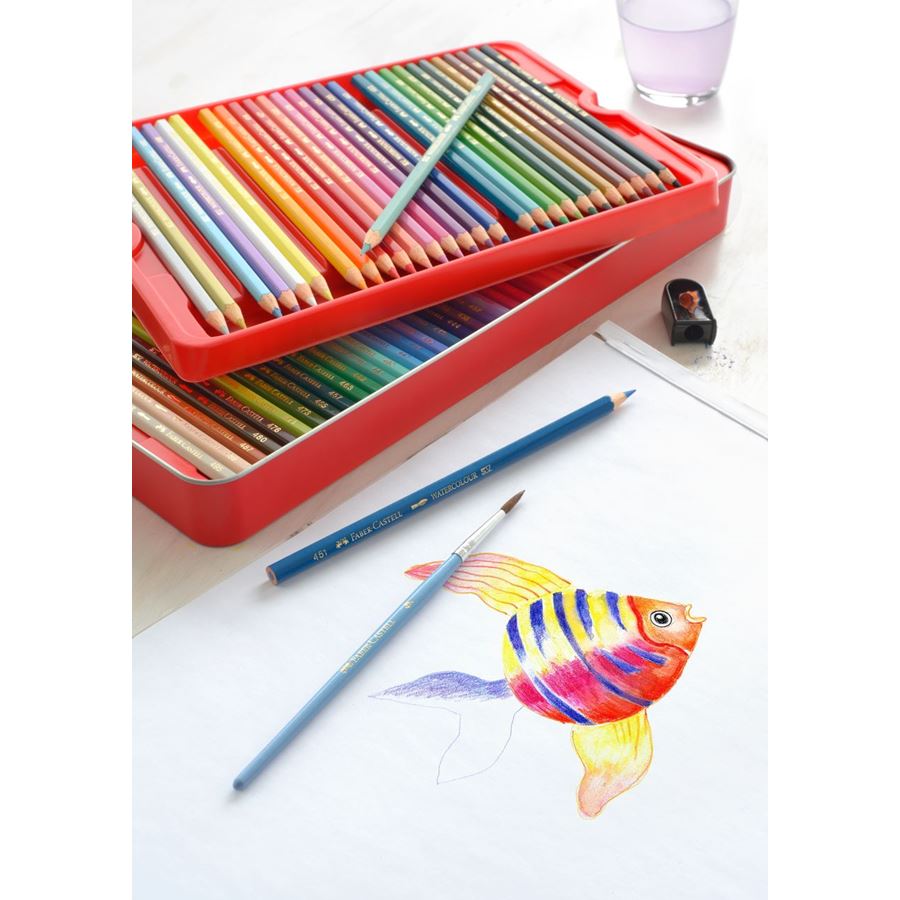
Faber-Castell Watercolour Pencils: A Guide to Drawing with Colour and Water
Faber-Castell watercolour pencils combine the control of coloured pencils with the fluid effects of watercolour paint. Used dry, they create clean lines and layered colour. Add water with a brush and the marks soften, blend and spread across the paper. This flexibility makes them useful for everything from quick sketches to more detailed paintings.
How watercolour pencils work
The pigment in a watercolour pencil is held in a water-soluble binder. On dry paper, the pencil behaves much like a conventional coloured pencil. When water is brushed over the marks, the binder dissolves and releases the pigment, which can then be blended or moved around the page.
The result depends on how much pencil you apply, how much water you use and the type of paper. A light layer with a damp brush produces a soft wash, while heavier strokes can create stronger, more saturated areas of colour.
Different ranges for different needs
Faber-Castell offers watercolour pencils in several ranges, including Albrecht Dürer and Goldfaber Aqua. Their specifications and intended uses differ, so it is worth checking the product information when choosing a set. In general, artists may look to a premium range for more demanding work, while a student or hobby range can be a practical choice for learning and everyday drawing.
Sets are available in different sizes, and pencils can also be bought individually in some ranges. A smaller set is often enough to explore the medium; additional colours can be added as your projects require.
Ways to use them
- Dry drawing: Use the pencils without water for controlled lines, shading and fine details.
- Draw, then wash: Add colour to the paper, then pass a clean, damp brush over it to create a watercolour effect.
- Layering: Build up dry colour gradually, activating each layer with water if you want to mix or soften it.
- Direct-to-brush: Moisten the pencil tip with a brush to pick up pigment for a more painterly mark.
- Detail over washes: Let a wash dry before adding crisp lines and small accents with a dry pencil.
Choosing paper and brushes
Paper has a major effect on the finished work. Lightweight paper may buckle when it becomes wet, while watercolour paper is designed to handle moisture more successfully. A textured surface can give the drawing a grainier appearance; a smoother surface is often helpful for fine detail.
A round watercolour brush is a versatile starting point. Keep a separate container of clean water nearby and rinse the brush between colours to avoid muddying your palette. For precise work, use a smaller brush; for broad washes, choose a larger one.
Tips for better results
- Begin with a light touch. It is easier to add more pigment than to remove a heavily applied layer.
- Test colours on a spare piece of the same paper before using them in your final work.
- Use less water for clearer edges and more water for softer, more diffused effects.
- Allow wet areas to dry before adding details if you want to keep them sharp.
- Sharpen carefully and avoid pressing too hard, as a fine point can mark or damage the paper.
- Keep the pencil labels or colour chart to hand when working with a larger set.
Who are they suited to?
Faber-Castell watercolour pencils can suit beginners, illustrators, sketchers and experienced artists who want a portable way to combine drawing and painting. They are particularly handy for travel and outdoor sketching: colour can be applied with pencils, while a small brush and a little water are enough to create washes.
They do not replace every quality of traditional watercolour paint. Pencil marks can remain visible after wetting, and the amount of pigment released depends on the pressure and coverage used. For many artists, however, this is part of the appeal: the medium offers both the precision of drawing and the expressive character of watercolour.
In summary
Faber-Castell watercolour pencils are a versatile option for anyone who wants to explore colour in both dry and water-activated forms. Choose a range that suits your experience and budget, pair it with suitable paper, and experiment with different amounts of water. With a little practice, the same set of pencils can produce delicate sketches, rich washes and detailed illustrations.
Faber-Castell Watercolour Pencils: 6 Frequently Asked Questions
- How do Faber-Castell watercolour pencils work?
- What is the difference between Faber-Castell Albrecht Dürer and Goldfaber Aqua pencils?
- Can Faber-Castell watercolour pencils be used without water?
- What paper is best for Faber-Castell watercolour pencils?
- How do you blend colours with Faber-Castell watercolour pencils?
- Are Faber-Castell watercolour pencils suitable for beginners?
How do Faber-Castell watercolour pencils work?
Faber-Castell watercolour pencils contain water-soluble pigment, so they can be used like ordinary coloured pencils or activated with water. Draw or shade on paper, then brush over the marks with a damp paintbrush to dissolve and blend the pigment, creating a soft watercolour wash. The amount of water and pencil pressure affects the result: use a light touch and little water for subtle colour, or apply more pigment and water for a richer, more fluid effect. Watercolour paper is recommended to help prevent the surface from buckling.
What is the difference between Faber-Castell Albrecht Dürer and Goldfaber Aqua pencils?
Faber-Castell Albrecht Dürer pencils are the brand’s artist-quality range, offering a wider colour selection and colour-specific lightfastness ratings for work intended to last. Goldfaber Aqua pencils are aimed more at students and hobbyists, providing a more affordable way to explore watercolour techniques. Both ranges are water-soluble and can be used wet or dry, but they differ in their intended level of use, available colours and product specifications, so check the details of the set you are considering.
Can Faber-Castell watercolour pencils be used without water?
Yes. Faber-Castell watercolour pencils can be used dry, just like ordinary coloured pencils, to create lines, shading and layers of colour. Their water-soluble pigment can be activated later with a damp brush, so you can also combine crisp pencil details with softer watercolour effects in the same drawing.
What paper is best for Faber-Castell watercolour pencils?
Watercolour paper is usually the best choice for Faber-Castell watercolour pencils, as it is designed to withstand water without buckling as easily as ordinary paper. A medium-weight paper with a lightly textured surface is a versatile option: the texture helps hold pigment, while still allowing you to add fine details. For best results, test the paper with your pencils and brush before starting, as the finish and thickness can affect how the colour blends and dries.
How do you blend colours with Faber-Castell watercolour pencils?
To blend colours with Faber-Castell watercolour pencils, apply the colours to watercolour paper, either side by side or in light layers, then use a clean, damp brush to soften the marks and draw the pigments together. Rinse the brush between colours to keep the blend clear, and add water gradually: a lightly damp brush gives you more control, while extra water creates softer transitions. You can also layer dry pencil over a fully dry wash to adjust the colour or add detail.
Are Faber-Castell watercolour pencils suitable for beginners?
Yes, Faber-Castell watercolour pencils are suitable for beginners because they offer the control of coloured pencils while letting you explore watercolour effects simply by adding water with a brush. You can use them dry at first, then practise activating the colour with a little water and building up layers gradually. Start with a small set, watercolour paper and a soft brush, and test colours on a spare sheet before working on a finished piece.