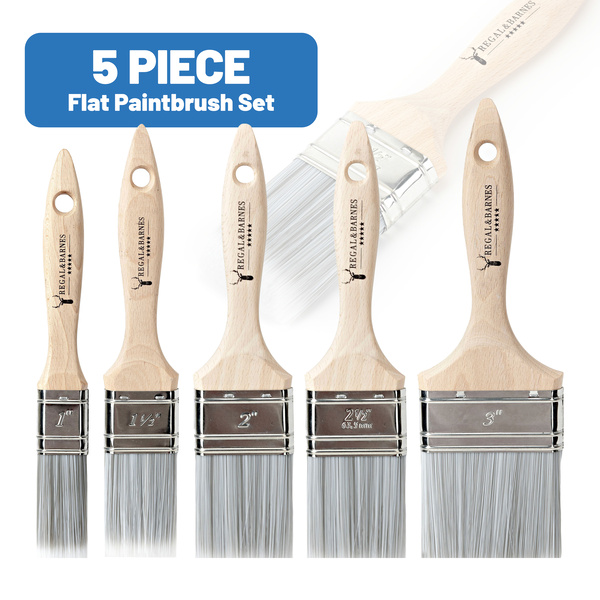
Flat Paint Brushes: A Practical Guide
A flat paint brush is a versatile tool with a straight, rectangular head and bristles arranged in a broad, even shape. It is commonly used for painting walls, furniture, doors and other flat surfaces. Its broad edge helps cover larger areas efficiently, while its straight sides make it useful for creating clean lines and reaching into corners.
What is a flat paint brush used for?
Flat brushes are designed to hold and spread paint across a surface. The width of the brush determines how much area it can cover in each stroke. Wider brushes are useful for larger, open surfaces, while narrower ones offer more control around edges, trim and smaller details.
A flat brush can also be used to:
- Paint doors, panels and furniture;
- Apply varnish, stain or other finishes;
- Paint straight edges and broad lines;
- Reach into corners or along skirting boards;
- Create brush marks and textured effects for decorative work.
Choosing the right flat brush
The best brush depends on the paint, the surface and the finish you want. Brush bristles are generally made from synthetic fibres, natural hair or a blend of materials.
Synthetic bristles
Synthetic brushes are commonly used with water-based paints, including many modern wall paints. They hold their shape well and are usually straightforward to clean. Some are also suitable for oil-based products, so check the brush label before buying.
Natural bristles
Natural-bristle brushes are often chosen for oil-based paints, varnishes and stains. They can provide a smooth finish, but may absorb water and lose their shape when used with some water-based paints.
Brush width
A wider brush can speed up work on broad, flat areas, but may feel harder to control near edges. A smaller brush is easier to manoeuvre for detailed work. For many decorating jobs, having two or three widths available is more useful than relying on a single brush.
How to use a flat paint brush
- Prepare the surface. Clean away dust and grease, fill imperfections and allow the surface to dry. Sand it if needed, then remove any remaining dust.
- Load the brush carefully. Dip only part of the bristles into the paint, then gently tap or wipe the brush against the inside of the tin. Avoid scraping it hard across the rim, as this can damage the bristles.
- Apply the paint evenly. Use steady strokes and work in manageable sections. Spread the paint rather than pressing hard, which can leave ridges or uneven coverage.
- Keep a wet edge. Overlap each stroke slightly with the previous one while the paint is still wet. This helps reduce visible brush marks.
- Finish with light strokes. Once the paint is spread, use gentle strokes in the same direction to smooth the surface.
For crisp edges, use the straight side of the brush and move it steadily along the boundary. With practice, a flat brush can give you good control without the need to apply excessive pressure.
Cleaning and storing a flat brush
Clean a brush as soon as you have finished using it. Follow the paint manufacturer’s instructions: water-based paint can usually be washed out with warm water and soap, while oil-based products may require a suitable cleaning solvent. Work the cleaner through the bristles, rinse or wipe away residue, and repeat until the brush is clean.
Reshape the bristles with your fingers and allow the brush to dry completely. Store it flat or hang it with the bristles pointing down. Avoid leaving a brush standing on its bristles, as this can bend them out of shape. If you need to pause during a job, wrap the brush tightly or place it in an airtight bag for a short time, rather than allowing the paint to dry on it.
Common mistakes to avoid
- Overloading the brush, which can cause drips and heavy, uneven coats;
- Pressing too hard, which spreads the bristles and may leave marks;
- Using a brush that is unsuitable for the type of paint;
- Allowing paint to dry in the bristles;
- Painting over a surface that has not been properly prepared.
Choosing a brush that lasts
A well-made flat paint brush should feel balanced in the hand, have securely fitted bristles and keep its shape during use. Price is not the only measure of quality: a brush that suits the paint and is cleaned properly can be used for many decorating jobs. Choose the width and bristle type to match your project, and take time to prepare the surface and apply the paint evenly.
Whether you are painting a piece of furniture or tackling a larger decorating task, a flat paint brush is a reliable tool for achieving broad, even coverage and controlled, straight strokes.
9 Essential Tips for Mastering the Use of Flat Paint Brushes
- Choose a flat brush for broad, even strokes.
- Match the brush width to the surface.
- Use synthetic bristles with water-based paint.
- Use natural bristles with oil-based paint.
- Load only the lower third of the bristles.
- Brush in long, steady strokes.
- Avoid pressing too hard on the brush.
- Clean the brush promptly after use.
- Store it flat or hanging to protect the bristles.
Choose a flat brush for broad, even strokes.
Choose a flat brush when you need to cover a broad surface with smooth, even strokes. Its wide, straight bristles help spread paint consistently, making it a practical choice for walls, doors, furniture and other flat areas. For the best finish, load the brush lightly and use steady, overlapping strokes.
Match the brush width to the surface.
Match the brush width to the surface you are painting. A wider flat brush covers large, open areas more quickly and evenly, while a narrower brush offers greater control on trim, edges and smaller details. Using a brush that is too wide can make precise work awkward; one that is too narrow may leave visible strokes and take longer on broad surfaces.
Use synthetic bristles with water-based paint.
Choose a flat paint brush with synthetic bristles when working with water-based paint. Unlike natural bristles, synthetic fibres absorb less water, helping the brush keep its shape and stiffness as you paint. This makes it easier to apply the paint smoothly and achieve an even finish.
Use natural bristles with oil-based paint.
For oil-based paint, choose a flat brush with natural bristles. They hold and spread thicker paint smoothly, helping to achieve an even finish with fewer visible brush marks. Clean the brush with the appropriate solvent after use, following the paint manufacturer’s instructions.
Load only the lower third of the bristles.
Dip only the lower third of the bristles into the paint. This gives the brush enough paint to cover the surface evenly while helping prevent drips and excess paint from building up near the ferrule (the metal band that holds the bristles). For better control, gently tap the brush against the inside of the tin to remove any surplus, rather than scraping it hard across the rim.
Brush in long, steady strokes.
Brush in long, steady strokes to spread the paint evenly and create a smoother finish. Keep each stroke moving in the same direction, using light, consistent pressure rather than pressing hard. Overlap strokes slightly while the paint is still wet to help prevent streaks and visible brush marks.
Avoid pressing too hard on the brush.
Avoid pressing too hard on a flat paint brush, as excess pressure can spread the bristles, leave streaks and push paint unevenly across the surface. Hold the brush lightly and let the bristles do the work, using smooth, steady strokes for a more even finish and better control.
Clean the brush promptly after use.
Clean a flat paint brush promptly after use to stop paint drying between the bristles, where it can be difficult to remove and may affect the brush’s shape and performance. Follow the paint manufacturer’s cleaning instructions: water-based paint can usually be washed out with warm water and a little soap, while oil-based paint may require a suitable solvent. Once clean, reshape the bristles and leave the brush to dry fully before storing it.
Store it flat or hanging to protect the bristles.
Store your flat paint brush flat or hang it with the bristles pointing down to help protect its shape. Avoid resting it on the bristles, as the weight can bend or splay them, making the brush harder to control and less effective next time you use it.