Art Paint Brushes: A Guide to Choosing and Caring for Them
Paint brushes are among an artist’s most versatile tools. The right brush can help create fine details, soft blends, bold strokes and expressive textures, while the wrong one can make a technique unnecessarily difficult. Understanding brush shapes, fibres and uses makes it easier to choose brushes that suit both your medium and your way of working.
How a paint brush is made
Most art brushes have three main parts:
- Bristles or fibres: The part that holds and applies the paint.
- Ferrule: The metal sleeve that secures the bristles to the handle.
- Handle: The part held by the artist. Short handles are often used for close-up work, while long handles allow painting at a greater distance from the surface.
Brushes come in a range of sizes. A lower number usually indicates a smaller brush, although sizing can vary between manufacturers. Brush shape and fibre are just as important as size when choosing one.
Common brush shapes
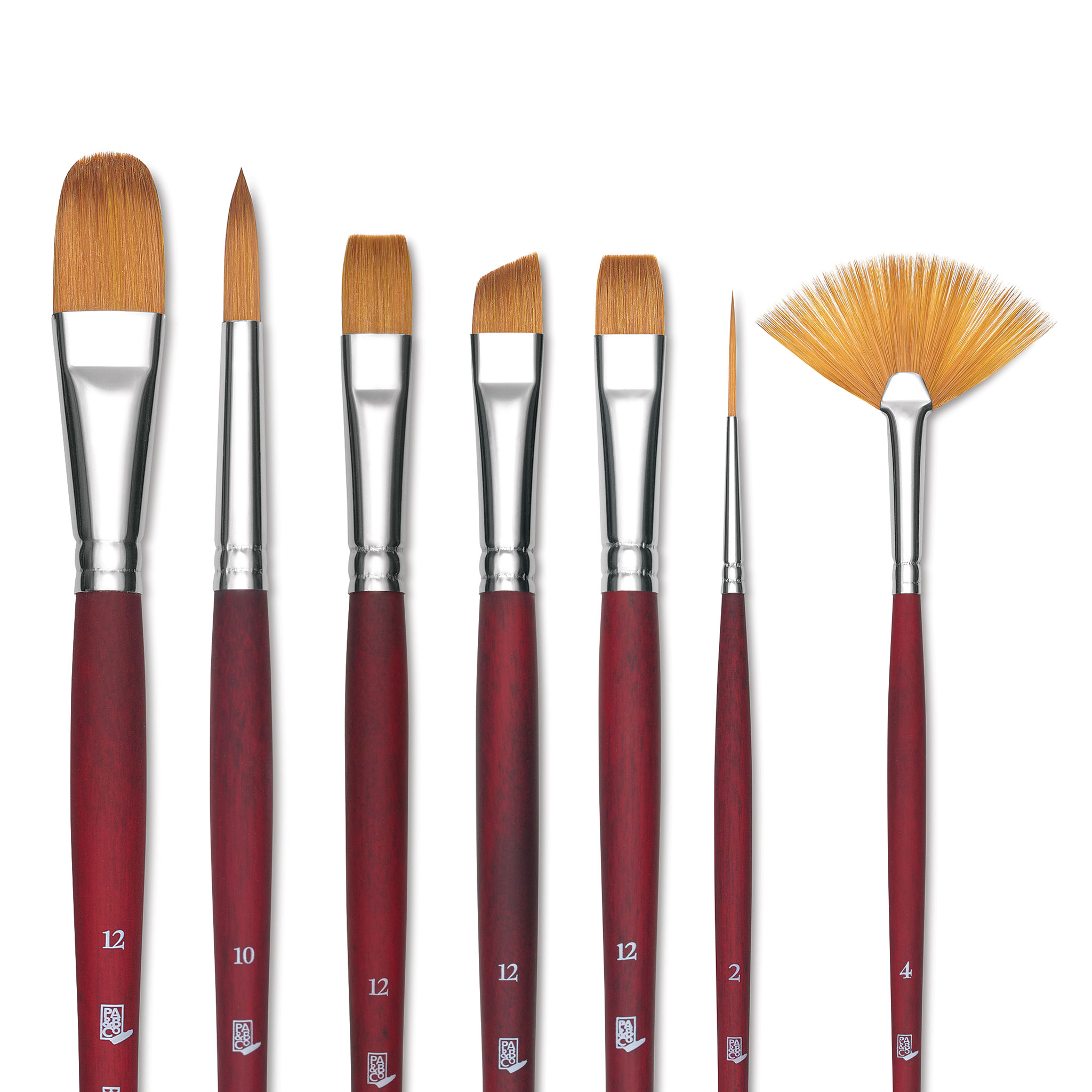
Round
Round brushes have a pointed or rounded tip and are useful for outlines, details and varied-width strokes. A larger round brush can also hold enough paint for broader marks.
Flat
Flat brushes have a straight, rectangular edge. They are well suited to filling larger areas, making crisp lines and creating broad, even strokes. Turning the brush on its side can produce a narrower mark.
Filbert
A filbert has a flat body with a softly rounded end. Its shape combines some of the control of a flat brush with the smoother edges of a round one, making it useful for blending and painting rounded forms.
Bright
A bright brush resembles a flat brush but has shorter bristles. It offers good control and works well for shorter, more definite strokes, particularly with thicker paint.
Fan
Fan brushes spread into a narrow, fan-shaped edge. Artists use them for textured effects, soft blending and loose marks that suggest foliage, hair or clouds.
Detail and liner brushes
These slender brushes are designed for fine lines, lettering and intricate details. Their longer bristles can help create continuous lines, though they may take practice to control.
Natural and synthetic fibres
Brush fibres affect how a brush feels and how it handles paint. Natural-hair brushes are made from animal hair and can hold paint and water well, depending on the type. They are traditionally used with watercolour and other fluid media.
Synthetic brushes are made from manufactured fibres. They are often durable, easier to clean and available in a wide range of shapes and stiffnesses. Many are suitable for acrylics, watercolours and other paints. Synthetic brushes are also a practical choice for artists who prefer not to use animal-hair products.
Some brushes combine natural and synthetic fibres to balance paint-holding capacity with durability. The best option depends on the paint, surface and effect you want to achieve.
Choosing brushes for different paints
Watercolour
Watercolour brushes need to carry water and pigment smoothly. Soft, absorbent fibres are often preferred, with round brushes providing versatility for washes and details. A larger brush can cover an area evenly, while a pointed brush helps with finer marks.
Acrylic
Acrylic paint can dry quickly and become difficult to remove if left on the brush. Resilient synthetic brushes are a popular choice, as they retain their shape and are generally straightforward to clean. Rinse them promptly after use.
Oil paint
Oil painting often calls for brushes that can manage thicker paint. Stiffer bristles can create firm, textured strokes, while softer brushes are useful for blending and smoother finishes. Choose a brush suitable for oil paint and follow the cleaning instructions for the products you use.
Tips for selecting a useful starter set
A large collection is not essential when starting out. A small selection of reliable brushes can cover many tasks. Consider choosing:
- a medium round brush for general work and details;
- a flat brush for broader strokes and covering areas;
- a smaller brush for fine details;
- a larger brush suited to washes or backgrounds, if your medium requires one.
When buying a brush, check that the bristles are secure, spring back into shape and form a neat point or edge where appropriate. Think about the type of paint you use most often, as well as the size of the artwork and the marks you want to make.
How to care for art paint brushes
Good brush care helps preserve the shape and performance of your tools. Clean brushes as soon as possible after use, using a cleaning method suitable for the paint. For water-based paints, rinse with water and gently work out any remaining colour. For oil paints, use the cleaner recommended for your paint and work in a well-ventilated area when required.
- Do not leave brushes standing bristle-end down in water or solvent.
- Avoid forcing paint deep into the ferrule, where it can be difficult to remove.
- Reshape the bristles gently after cleaning.
- Allow brushes to dry fully before storing them.
- Store them flat or with the bristles facing upwards, so the tips are not bent.
Finding the brush that suits your style
Paint brushes are not just practical tools; they influence the character of a finished artwork. A soft round brush may encourage delicate washes, while a stiff flat brush can produce energetic, textured marks. Experimenting with different shapes and fibres is a simple way to discover new techniques and develop a personal approach to painting.
8 Essential Tips for Choosing, Using and Caring for Paintbrushes
- Choose brush shapes to suit your technique.
- Use soft brushes for smooth washes.
- Pick stiff bristles for thick paint.
- Wet watercolour brushes before use.
- Load paint without covering the ferrule.
- Clean brushes promptly after painting.
- Reshape bristles before leaving brushes to dry.
- Store brushes upright or flat, not bristle-down.
Choose brush shapes to suit your technique.
Choose brush shapes to suit your technique: round brushes are versatile for details, outlines and varied strokes, while flat brushes are ideal for broad marks, filling areas and crisp edges. Filberts have softly rounded tips that work well for blending, and fan brushes can create textured effects or soften transitions. Trying different shapes will help you find the right tool for the effects you want to achieve.
Use soft brushes for smooth washes.
Use soft brushes when you want to create smooth, even washes of colour. Their flexible bristles release paint gently and help it flow across the surface with fewer visible marks. A larger, soft brush can cover broad areas efficiently, while a smaller one offers more control around details. Keep the brush well loaded and use steady strokes to help the wash remain consistent.
Pick stiff bristles for thick paint.
For thick paint, choose a brush with stiff bristles, as it can push and spread the paint across the surface more effectively than a soft brush. Stiffer bristles also help create bold, textured strokes and give you better control when working with heavy-bodied paints such as oils or acrylics.
Wet watercolour brushes before use.
Before using a watercolour brush, dampen it with clean water and gently shape the bristles to a point. A slightly wet brush helps the fibres move smoothly and prepares them to pick up pigment evenly. Avoid soaking the brush for too long, as this can loosen the ferrule or damage the bristles.
Load paint without covering the ferrule.
When loading an art paint brush, pick up paint with the bristles rather than dipping the brush all the way to the ferrule—the metal band that holds the bristles in place. Paint can collect beneath the ferrule, making the brush harder to clean and causing the bristles to spread or loosen over time. Loading only the working part of the brush helps it keep its shape and perform well for longer.
Clean brushes promptly after painting.
Clean your paint brushes promptly after painting to prevent colour from drying between the bristles, where it can be difficult to remove and may damage their shape. Use a cleaning method suited to your paint, rinse or wipe away all residue, then gently reshape the bristles and leave the brushes to dry fully before storing them.
Reshape bristles before leaving brushes to dry.
After cleaning your paint brushes, gently reshape the bristles with your fingers before leaving them to dry. Restoring the brush to its original point or edge helps it keep its shape and makes it easier to control next time. Let brushes dry flat or with the bristles facing downwards, without resting the tips on a surface.
Store brushes upright or flat, not bristle-down.
Store paint brushes upright with the bristles facing upwards, or lay them flat once they are completely dry. Avoid standing them bristle-down, as the weight can bend or split the tips and damage their shape. Proper storage helps brushes stay in good condition and ready for your next painting session.