Best Acrylic Paint Brushes: How to Choose the Right Set
The best acrylic paint brushes make it easier to control colour, create clean edges and explore different textures. But there is no single brush that suits every painting style. The right choice depends on the surface you are working on, the effects you want to create and how you like to handle paint.
Whether you are a beginner choosing your first set or an experienced artist adding to your collection, this guide explains what to look for in acrylic paint brushes and which shapes are most useful.
What makes a good acrylic paint brush?
Acrylic paint can be used thickly or diluted with water, so a brush needs to be resilient and versatile. Look for bristles that spring back into shape, hold a reasonable amount of paint and feel secure in the ferrule — the metal section that connects the bristles to the handle.
Good brushes should also be comfortable to hold and easy to clean. Synthetic bristles are often a practical choice for acrylics: they are durable, tend to retain their shape and are generally more affordable than natural-hair brushes. Quality varies, so check that the bristles do not shed easily and that the handle and ferrule feel firmly attached.
Best brush shapes for acrylic painting
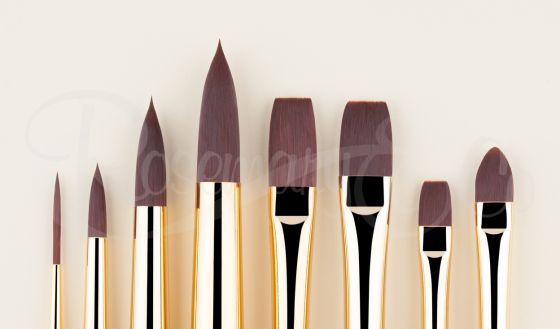
Round brushes: best for detail and line work
A round brush comes to a point and is useful for fine lines, outlines, small details and controlled marks. A larger round can also cover small areas. If you want one versatile brush shape for a starter kit, a medium-sized round is a useful option.
Flat brushes: best for broad strokes and edges
Flat brushes have a straight, squared-off edge. They are ideal for filling larger areas, creating crisp borders and making broad, even strokes. Turn the brush on its side to make narrower lines.
Filbert brushes: best for soft edges
A filbert has a flat body with a rounded tip. It combines some of the coverage of a flat brush with the softer marks of a round, making it a good choice for curved forms, blending and painting petals or figures.
Bright brushes: best for short, controlled strokes
Brights are similar to flat brushes but have shorter bristles. Their firmness can make them useful for applying thicker acrylic paint and for making compact, deliberate strokes.
Fan brushes: best for texture
The spread-out bristles of a fan brush can create effects such as foliage, grass, fur and textured backgrounds. It is a specialist tool rather than an essential first purchase, but it can add variety to your brushwork.
Synthetic or natural bristles?
Synthetic brushes are usually the most straightforward choice for acrylic painting. They are hard-wearing, easy to maintain and available in a wide range of shapes and prices. Some artists also use natural-hair brushes, particularly when they prefer a softer feel or a specific paint-handling quality. However, acrylic can dry quickly on bristles, so whichever type you choose, prompt cleaning is important.
For most beginners, a small selection of good-quality synthetic brushes is more useful than a large set of low-quality brushes. Consider starting with a small round, a medium round, a flat and a filbert, then add other shapes as your work requires them.
Choosing brush sizes
Brush sizes are marked with numbers, but sizing can vary between brands. A size 6 in one range may not match a size 6 in another, so check the brush dimensions or view it in person where possible.
A compact range of sizes is usually enough to begin with:
- Small brushes for fine details and narrow lines.
- Medium brushes for general painting and smaller areas of colour.
- Large brushes for backgrounds, broad strokes and covering bigger surfaces.
What to look for when buying a brush set
- Useful shapes: Choose a mix of rounds and flats, with a filbert if you enjoy softer edges.
- Firm bristles: The brush should feel responsive and return to its shape after use.
- A secure ferrule: Loose bristles or a wobbly connection can make a brush frustrating to use.
- Comfortable handles: The handle should suit your grip and the way you paint.
- A sensible range of sizes: A few reliable brushes are often better than a large set with shapes you may never use.
How to care for acrylic paint brushes
Acrylic paint can become difficult to remove once it dries, so clean brushes as soon as you have finished using them. Rinse the bristles in water, gently work out any remaining paint with your fingers or a suitable brush cleaner, and reshape the tip before leaving the brush to dry.
Avoid leaving brushes standing bristles-down in water, as this can damage their shape and loosen the ferrule. Do not leave paint to dry on the bristles, and store clean brushes flat or upright with the bristles facing upwards.
So, which acrylic paint brushes are best?
For a dependable starter collection, choose a few well-made synthetic brushes in round, flat and filbert shapes. A round brush offers control, a flat brush covers larger areas and creates sharp edges, while a filbert is useful for softer, rounded marks. Add a fan brush or other specialist shapes later if they suit your style.
The best acrylic paint brushes are ultimately the ones that feel comfortable, hold their shape and help you make the marks you want. A carefully chosen small set can take you a long way, whether you are painting fine details or building up bold layers of colour.
Top Benefits of Premium Acrylic Paint Brushes for Artists
- Offer precise control for detailed work.
- Hold their shape after repeated use.
- Synthetic bristles are durable and easy to clean.
- A range of shapes suits different techniques.
- Comfortable handles support longer painting sessions.
- Quality brushes help create smooth, even strokes.
Considerations When Choosing the Best Acrylic Paint Brushes: Cost, Quick-Drying Challenges, and Brand Variability
- Quality brushes can be expensive.
- Acrylic paint can dry quickly on bristles.
- Brush size and feel vary between brands.
Offer precise control for detailed work.
The best acrylic paint brushes offer precise control for detailed work, helping you create fine lines, crisp edges and carefully defined shapes. A well-shaped tip makes it easier to place colour exactly where you want it, while responsive bristles support steady, confident strokes. This control is especially useful for adding small features, refining outlines and bringing intricate areas of a painting into focus.
Hold their shape after repeated use.
A good acrylic paint brush should hold its shape after repeated use, keeping its tip or edge neat for controlled strokes and precise details. Resilient bristles spring back into place after painting and cleaning, helping the brush perform consistently over time. This makes it easier to work confidently, whether you are creating fine lines, smooth blends or broad, even marks.
Synthetic bristles are durable and easy to clean.
Synthetic bristles are a durable, low-maintenance choice for acrylic painting. They tend to keep their shape through repeated use and are easy to rinse clean, helping you remove paint before it dries and keep your brushes ready for the next session.
A range of shapes suits different techniques.
A good selection of acrylic paint brushes gives you the flexibility to try different techniques. Round brushes are ideal for fine details and precise lines, while flat brushes cover larger areas and create crisp edges. Filberts make softer, rounded strokes, and fan brushes can add texture to foliage, fur or backgrounds. Having a range of shapes helps you choose the right tool for each part of your painting.
Comfortable handles support longer painting sessions.
Comfortable handles can make a noticeable difference during longer painting sessions. A well-balanced brush that sits naturally in your hand helps reduce strain on your fingers and wrist, so you can focus on your technique and enjoy painting for longer.
Quality brushes help create smooth, even strokes.
Quality acrylic paint brushes hold and distribute paint evenly, helping you create smooth, consistent strokes with fewer streaks or gaps. Their well-shaped bristles give you better control over the amount of paint on the brush, making it easier to achieve an even finish across both broad areas and finer details.
Quality brushes can be expensive.
One drawback of the best acrylic paint brushes is their price: high-quality brushes can be expensive, especially if you need several shapes and sizes. While they may last longer with proper care, the initial cost can be off-putting for beginners or anyone working to a tight budget. A practical approach is to start with a small set of reliable brushes and add to it as your needs grow.
Acrylic paint can dry quickly on bristles.
One drawback of acrylic paint brushes is that acrylic paint can dry quickly on the bristles, especially in warm conditions or if the brush is left unused while painting. Once dry, paint can be difficult to remove and may leave the bristles stiff or misshapen, reducing the brush’s performance. Rinse brushes regularly during use and clean them thoroughly as soon as you finish.
Brush size and feel vary between brands.
Brush size and feel can vary noticeably between brands, even when brushes carry the same size marking. A size 6 in one range may be wider, longer or firmer than a size 6 in another, so replacing a favourite brush or buying online can be tricky. Checking the brush’s measurements, bristle type and product reviews can help, but you may still need to try a few options to find one that feels right in your hand.