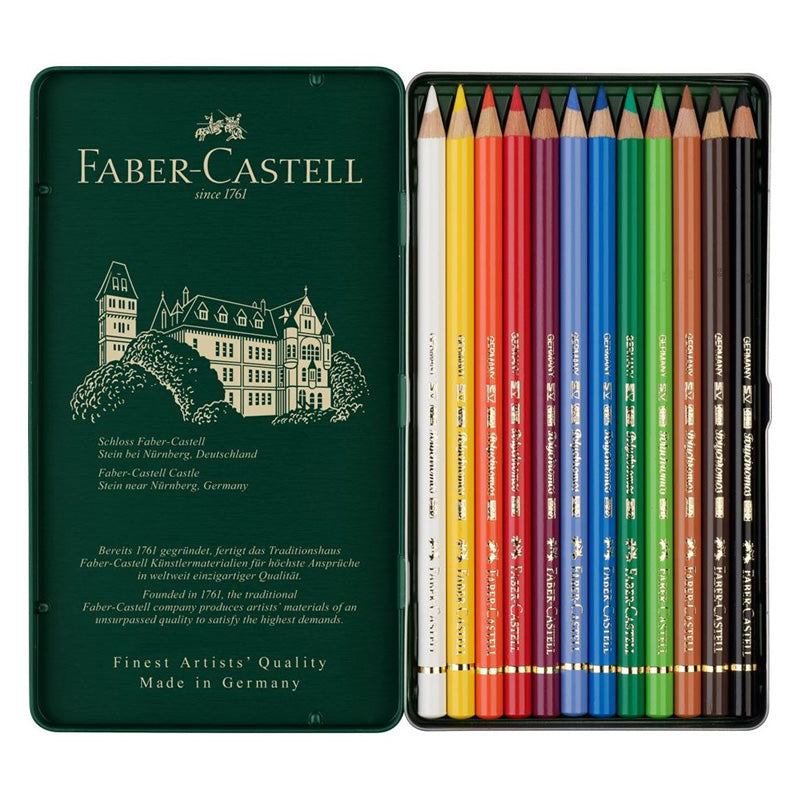
Polychromos Coloured Pencils: A Guide for Artists
Polychromos coloured pencils are a popular choice among illustrators, designers and fine artists. Made by Faber-Castell, they are known for their rich colour, smooth application and ability to create everything from precise details to layered, expressive drawings. Whether you are new to coloured-pencil art or looking to expand your materials, Polychromos offer plenty of scope for experimentation.
What makes Polychromos pencils distinctive?
Polychromos pencils have an oil-based core, which gives them a firm feel and a clean, controlled line. They can be sharpened to a fine point for intricate work, while their strong pigmentation allows colour to show clearly on the page. The leads are designed to resist breaking, and the colours can be layered and blended to build up depth and subtle changes in tone.
Many Polychromos colours carry a lightfastness rating, indicating how well they are expected to resist fading when exposed to light. For artwork intended for display or sale, it is worth checking the rating of each colour and considering how the finished work will be stored or framed.
Techniques to try
One of the advantages of Polychromos pencils is their versatility. A light touch creates soft, delicate shading, while firmer pressure produces more saturated colour. Try these approaches to explore what the pencils can do:
- Layering: Apply several light layers, gradually building colour and depth. This often gives a more even result than pressing hard straight away.
- Blending: Place related colours next to one another and layer them gently to create smooth transitions. A colourless blender can help soften the appearance of pencil marks.
- Hatching: Use parallel lines or cross-hatching to create texture and tone. Vary the spacing and direction of the marks to suit the subject.
- Burnishing: Apply heavier pressure over existing layers to create a dense, polished finish. This can fill the paper’s texture, so it is best used selectively.
- Fine detail: Sharpen the pencil regularly for crisp edges, delicate features and small areas of intricate colour.
Choosing paper and colours
Paper has a significant effect on the final result. Smooth paper is useful for fine detail, while paper with more texture can hold additional layers and give a drawing a more traditional, grainy appearance. Before beginning a finished piece, test your pencils on a small area of the chosen paper to see how it responds to layering and pressure.
A large set offers a wide palette, but a smaller selection can be enough to get started. Choose a mix of light, mid-tone and dark colours, along with a few warm and cool shades. Learning to combine colours is often more useful than owning every colour in the range. Keeping a simple colour chart can also help you remember how each pencil looks on your chosen paper.
Care and storage
To protect the leads, sharpen Polychromos pencils with a good-quality sharpener and avoid applying unnecessary pressure. Store them somewhere dry, ideally in a case or box that keeps them organised and prevents them from rolling or being knocked about. If a lead breaks, sharpening gently may be enough to remove the damaged section.
Are Polychromos pencils right for you?
Polychromos coloured pencils suit artists who value precision, strong colour and the ability to build up a drawing gradually. They work well for botanical illustration, portraits, landscapes, design work and detailed sketching. Their firm cores may feel different from softer coloured pencils, so a little practice can help you find the pressure and layering approach that works best.
With thoughtful colour choices and a patient, layered technique, Polychromos pencils can produce artwork with impressive detail and depth. Experimenting with different papers and methods is the best way to discover their full potential.
Mastering Polychromos: Top Tips for Vibrant and Detailed Artwork
- Build colour with light, layered strokes.
- Keep the pencil sharp for fine details.
- Use a colourless blender to smooth layers.
- Try complementary colours for richer shadows.
- Check lightfastness ratings for artwork you plan to display.
- Use textured paper to help layers grip.
Build colour with light, layered strokes.
Build colour gradually with light, layered strokes rather than pressing hard from the start. Gentle layers give you greater control over tone, make it easier to blend colours smoothly and help preserve the paper’s texture for further detail. Add each layer with a light hand, adjusting the direction of your strokes or introducing new shades until you achieve the depth and richness you want.
Keep the pencil sharp for fine details.
Keep your Polychromos pencil sharp when working on fine details, such as delicate outlines, small features or intricate textures. A well-pointed tip gives you greater control and helps create clean, precise marks. Sharpen gently with a quality sharpener to avoid putting unnecessary pressure on the lead.
Use a colourless blender to smooth layers.
Use a colourless blender to soften and smooth layers of Polychromos coloured pencil. Apply it over your existing colours with light, even pressure to help blend pencil marks and create a more unified finish. Build up the colour gradually, as firm burnishing can fill the paper’s texture and make it harder to add further layers.
Try complementary colours for richer shadows.
Try using complementary colours—hues opposite each other on the colour wheel—to create richer, more natural-looking shadows with Polychromos pencils. For example, layer a little blue or blue-green into the shadows of an orange subject, or add a touch of violet to deepen yellow areas. Apply the colours lightly and build them up gradually, so the shadows gain depth without looking dull or muddy.
Check lightfastness ratings for artwork you plan to display.
If you plan to display your Polychromos artwork, check the lightfastness rating of each colour before you begin. Lightfastness indicates how well a pigment resists fading when exposed to light, and ratings can vary between pencils. Choosing more lightfast colours and displaying the finished piece away from prolonged direct sunlight can help preserve its appearance over time.
Use textured paper to help layers grip.
Textured paper gives Polychromos coloured pencils more tiny grooves to settle into, helping successive layers grip the surface and build richer colour. A light, even touch works well at first; gradually add layers while leaving some paper tooth available for later marks. Very rough paper can make fine details harder, so try a few textures to find the balance that suits your style.