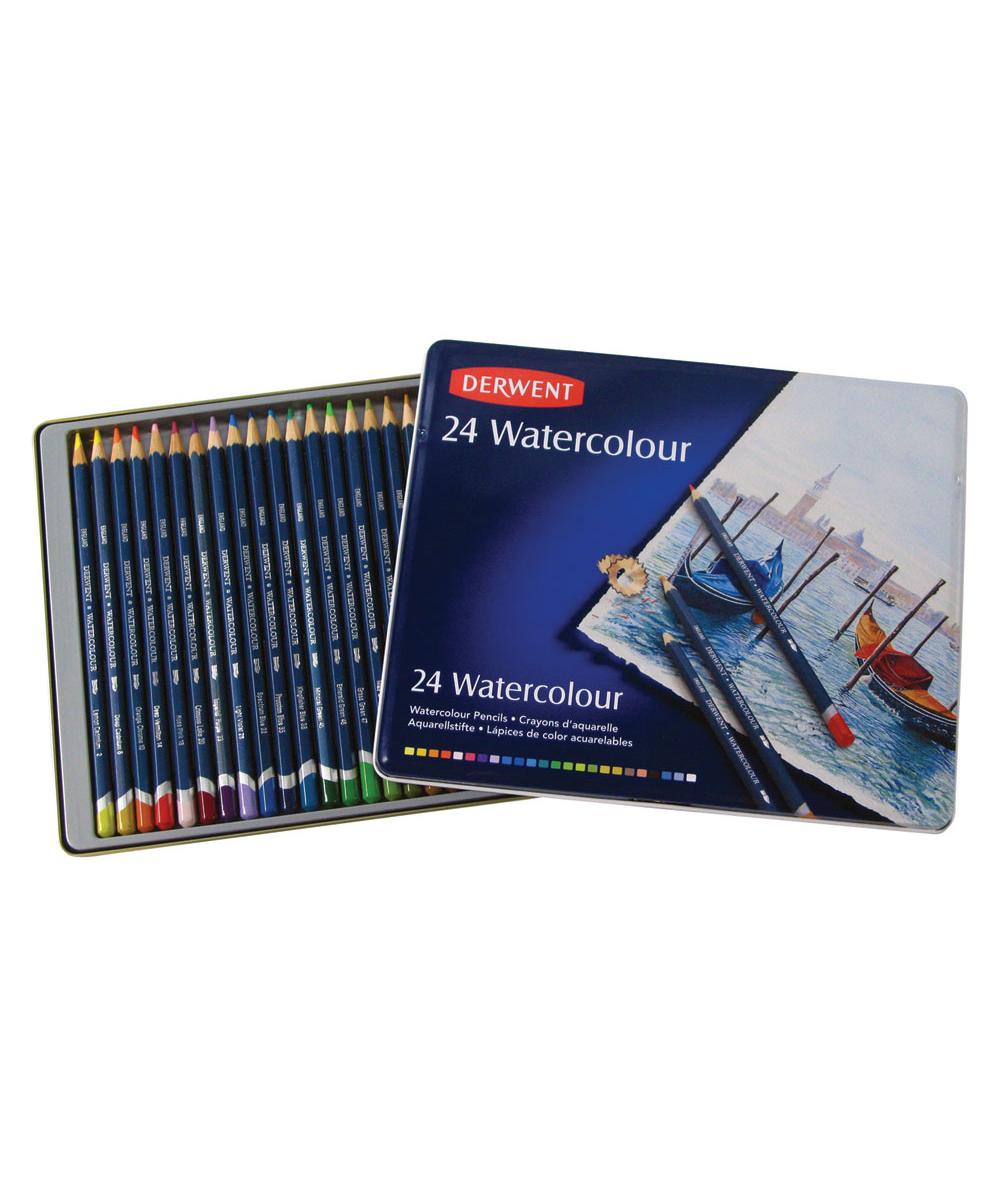
Derwent Watercolour Pencils: A Guide for Artists
Derwent watercolour pencils combine the control of coloured pencils with the soft, flowing effects of watercolour. Used dry, they create clear lines and buildable colour. Add water with a brush and the pigment dissolves into washes, allowing artists to move between precise detail and looser, painterly effects.
What makes them different?
Unlike conventional coloured pencils, watercolour pencils have water-soluble pigment. This means marks can be softened, blended or spread with a damp brush. The pencil format makes it easier to place colour accurately than with a traditional watercolour pan or tube, particularly when working on fine details, outlines or small areas.
Derwent offers several water-soluble pencil ranges, so it is worth checking the product name when shopping. Its Watercolour range is designed for watercolour-style effects, while other ranges, such as Inktense, have different properties and behave differently once activated.
Ways to use Derwent watercolour pencils
- Draw first, then add water: Apply colour to dry watercolour paper, then use a clean, damp brush to dissolve and spread the pigment.
- Work with a dry pencil: Keep the pencil dry for defined lines, texture and detail, or combine dry marks with activated areas.
- Pick up colour with a brush: Rub the pencil on a separate surface and lift the pigment with a wet brush, much as you would with a watercolour pan.
- Apply colour to a wet surface: Lightly damp paper can produce softer, more fluid marks. Test this technique first, as very wet paper may make the pigment spread unpredictably.
- Layer colour: Build up colour gradually, allowing areas to dry between washes when you want clearer layers and edges.
Choosing paper and brushes
Watercolour paper is usually the best choice because it is made to handle moisture. Heavier paper is less likely to buckle, while a textured surface can add character to a drawing. A small round brush is useful for details, and a larger brush can help blend broader areas. Keep a separate brush or clean water nearby to avoid muddying colours.
Tips for better results
- Begin with light pressure; it is easier to add pigment than to remove a heavy layer.
- Use less water for strong, controlled colour and more water for paler washes.
- Clean the brush between colours to keep mixtures bright.
- Leave some areas of the paper unpainted to preserve highlights.
- Try techniques on a scrap of the same paper before starting a finished piece.
- Let the paper dry before adding fine pencil details over a wash.
Who are they suited to?
Derwent watercolour pencils can suit beginners who want a manageable introduction to watercolour, as well as experienced artists looking for greater precision. They are useful for sketching outdoors, illustration, botanical studies and mixed-media work. Their portable format also makes them convenient when carrying paints and palettes is impractical.
Are Derwent watercolour pencils worth considering?
If you enjoy drawing but want the option of adding fluid colour, watercolour pencils offer a versatile middle ground. They provide the directness of a pencil while allowing marks to be transformed with water. The final effect depends on the paper, brush, amount of water and pressure used, so experimentation is part of the process. A small set is a practical way to explore the medium before choosing a broader range of colours.
Mastering Derwent Watercolour Pencils: 8 Essential Tips for Stunning Results
- Use light pressure to keep colours easy to blend.
- Layer colours gradually for richer tones.
- Dip the pencil tip briefly for stronger marks.
- Activate pigment with a damp brush, not a soaking one.
- Leave some areas dry for crisp details.
- Test colour and water effects on scrap paper first.
- Sharpen gently to avoid breaking the core.
- Let each wash dry before adding another layer.
Use light pressure to keep colours easy to blend.
Use a light touch when applying Derwent watercolour pencils, especially if you plan to activate the pigment with water. Gentle layers are easier to blend into soft washes and combine with other colours, while heavy pressure can leave a dense mark that is harder to move around the paper. Build up the colour gradually until you reach the strength you want.
Layer colours gradually for richer tones.
Build richer tones with Derwent watercolour pencils by layering colour gradually rather than pressing hard straight away. Start with a light application, activate it with a little water if desired, and let the paper dry before adding another layer. This gives you greater control over the depth and intensity of the colour while helping to keep the result clear and vibrant.
Dip the pencil tip briefly for stronger marks.
Briefly dip the tip of a Derwent watercolour pencil in clean water before drawing to create stronger, more intense marks. Use a light touch and avoid soaking the pencil, as too much water can soften the core and make it prone to damage.
Activate pigment with a damp brush, not a soaking one.
To activate Derwent watercolour pencil pigment, use a damp brush rather than one that is soaking wet. Too much water can make the colour spread beyond the area you intended, dilute it excessively or cause the paper to buckle. A lightly damp brush gives you more control, helping you blend the pencil marks into smooth washes while preserving detail.
Leave some areas dry for crisp details.
Leave some areas dry for crisp details when using Derwent watercolour pencils. Water activates and softens the pigment, so keeping selected marks untouched preserves their clean edges and fine lines. This contrast between dry pencil strokes and blended washes adds definition and texture to your artwork.
Test colour and water effects on scrap paper first.
Before starting your artwork, test your Derwent watercolour pencils on a scrap of the same paper. Try different levels of pressure and water to see how the colours blend, spread and change as they dry. This quick check helps you choose the right technique and avoid unexpected results in your finished piece.
Sharpen gently to avoid breaking the core.
Sharpen Derwent watercolour pencils gently to help prevent the core from breaking. Use a sharp, good-quality sharpener and turn the pencil slowly, applying light pressure rather than forcing it. This is especially important if the core is soft or the pencil has been dropped, as small cracks can make it more prone to snapping.
Let each wash dry before adding another layer.
Let each wash dry completely before adding another layer of colour. This helps keep the pigments distinct, prevents them from blending into muddy tones and gives you more control over the finished effect. If you want a softer blend, apply the next layer while the paper is still slightly damp; for crisp details and clearer layers, wait until it is fully dry.